The reason more people report symptoms of urinary incontinence in summer is that lower-body muscles stiffened by air conditioning and a disrupted habit of fluid intake come together. The two factors place a burden on the bladder and the pelvic floor muscles at the same time, and this is understood to increase the frequency of incontinence.
This article sets out the causes of seasonal worsening together with the three types of urinary incontinence, and the ways of checking bladder function and caring for the pelvic muscles.
Is it true that urinary incontinence gets worse in summer?
When a person stays for a long time indoors where the air conditioning is strong, the lower-body muscles stiffen in a contracted state, and as this tension carries through to the pelvic floor muscles, the force supporting the bladder becomes weaker than usual, the frequency of urine leakage tends to rise with it, and the effect reaches daily life as a whole.
In summer, the amount of drinks consumed rises with the idea of replacing the fluid lost through sweat, but when drinks that promote urine production, such as caffeinated and carbonated drinks, increase, the bladder is stimulated more frequently as well, the symptoms of incontinence tend to appear more clearly, and the longer the heat continues, the stronger that tendency becomes.
- Lower — body stiffness from air conditioning — the muscles stiffen and bladder control is reduced
- Imbalance in fluid regulation — the amount of fluid the bladder has to handle increases
- Excessive intake of drinks — it stimulates the bladder and brings on incontinence

Are leaking when you cough and a sudden urgent need to go different problems?
Stress incontinence is the form in which urine leaks at the moment abdominal pressure rises suddenly, as with a cough, a sneeze or lifting a heavy object; it appears when the pelvic floor muscles have weakened and cannot support the bladder sufficiently, and it can appear repeatedly and frequently even in everyday movement.
Urge incontinence is the form in which the feeling of needing to urinate comes on urgently and urine leaks because it cannot be held, while overflow incontinence is the form in which urine trickles out little by little with the bladder not fully emptied; the mechanism by which each arises is itself different, and the approach differs as well.
- Stress — the type in which urine leaks at the moment abdominal pressure rises
- Urge — the type in which the need to urinate comes on urgently and cannot be held
- Overflow — the type in which urine remains and trickles out little by little
How is bladder function checked?
As body weight increases, the pressure carried by the abdomen grows and the burden placed on the bladder and the pelvic floor muscles increases with it, so the step of confirming body weight and the state of abdominal pressure first becomes the starting point for understanding bladder function and provides the basis for setting the direction of management.
Going through the process of confirming how much the pelvic floor muscles actually contract provides an accurate basis for telling whether the condition is stress incontinence, urge incontinence, or a state in which the two appear together, and the method of management that follows is then set naturally and in detail to match that result.
How should pelvic muscles that have become lax be cared for?
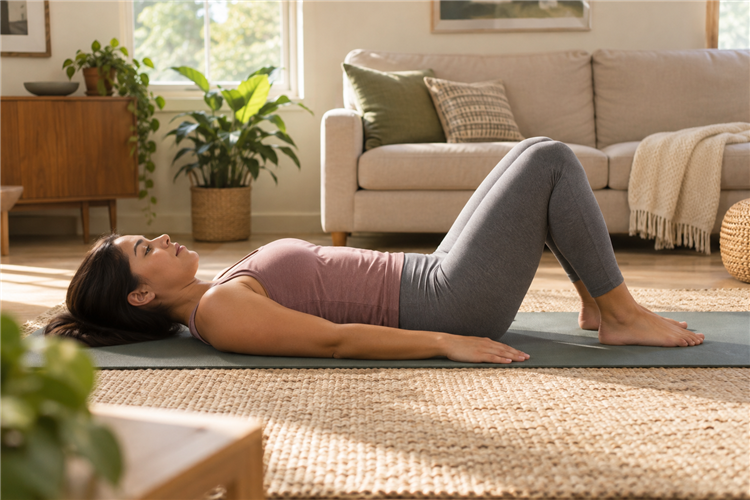
Pelvic floor exercise consists of repeating the movement of tightening the muscles, as when holding in urine, and then releasing them; repeating it briefly for 5 minutes at a time, divided into several sessions a day, is more favourable for raising contractile strength without muscle fatigue, and it is important to keep it up steadily.
As for fluid intake, drinking in portions spread through the day rather than a large amount at once helps reduce the burden on the bladder, and the habit of drinking a large amount at a particular time, such as 10 minutes before falling asleep, easily leads to night-time incontinence, so it is better avoided.